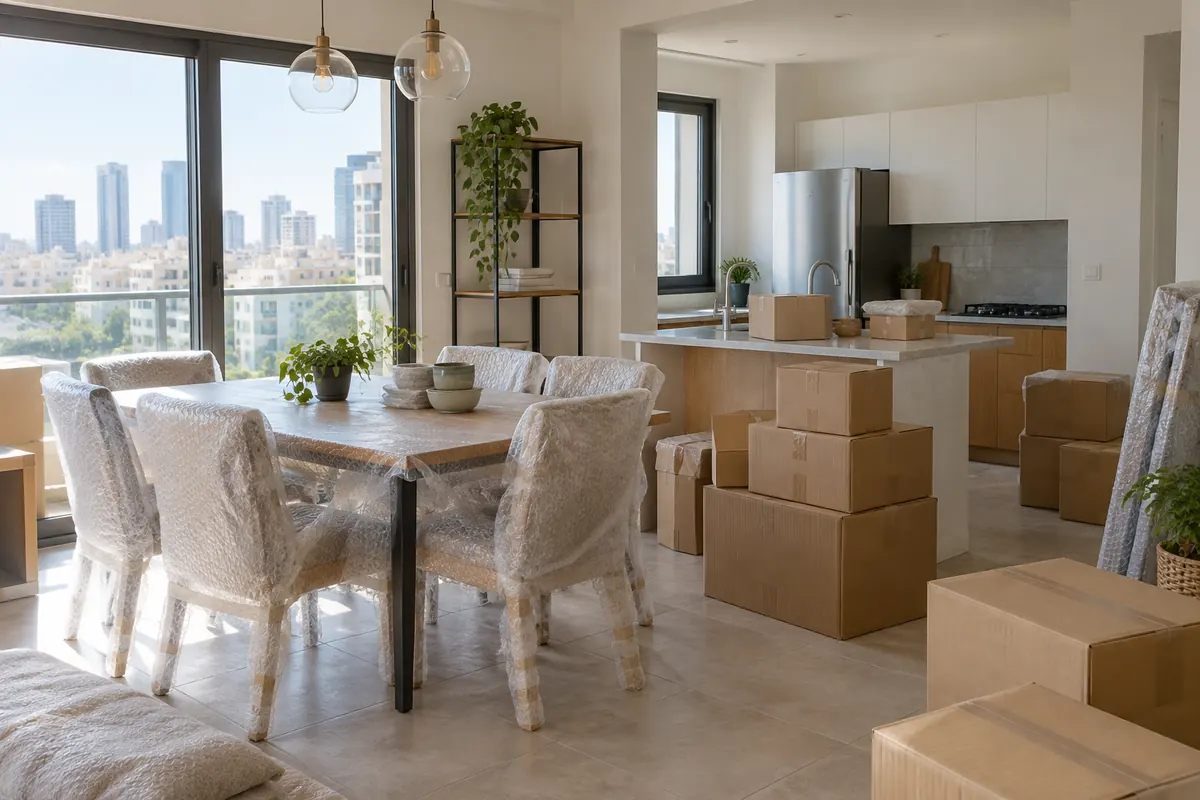
Pack essentials separately so you do not have to search.
Separate your personal bag from the household essentials box
A first-night kit should make the home usable before every cupboard is unpacked. Prepare two separate groups: a personal bag travelling with you and a clearly labelled household box travelling with the agreed load. Keep keys, identity documents, valuables, your phone, its charger and necessary medication under your control. Do not assume a box inside the truck will be reachable during a journey or delayed unloading. For the household box, choose clean bedding, towels, toilet paper, soap, a change of clothes and rubbish bags. Count people rather than rooms: a couple and a family with young children need different quantities. Close toiletries securely and separate liquids from chargers and other electrical items. Use a manageable container rather than making one oversized, heavy box.
Make one meal and the sleeping area practical
Choose drinking water, a familiar snack, cups and a small set of utensils for the first meal. Food requiring refrigeration should not sit in an ordinary moving box while the vehicle waits. Before relying on a kettle, check that the property has electricity and a safe place to connect it. Pack bedding and sleepwear in a clean closed bag labelled for the relevant bedroom. If a bed is being dismantled, keep its fittings identified and arrange reassembly as part of the agreed work. For a late arrival, a useful unpacking sequence is to clear safe access, prepare the sleeping area and bathroom, and leave books, decorative items and seasonal clothes for later. This is a household planning example, not a reason to rush lifting or climb over stacked furniture.
Adapt the kit for children, pets and the next working day
A baby may need feeding supplies, nappies and changes of clothes during the journey as well as after arrival. Keep a favourite toy accessible rather than sealing it inside the general toy collection. For a pet, prepare its carrier, water, food, bowl and familiar bedding, then choose a quiet secure space away from an entrance that movers will repeatedly open. If you must work the following morning, carry the laptop and required accessories separately from heavy household goods. Check what the new address needs for power and internet access rather than assuming the desk will immediately be ready. Follow the relevant storage instructions for medicines and seek appropriate professional advice in advance if special conditions are required.
Label the kit and agree how it will be delivered
Write “First night”, the destination room and a short contents list on two sides of the household box. Give it its own number in the inventory. Show the crew which personal bag must not be loaded and which household box needs to be accessible at delivery. “Load last” is not a universal rule: load stability, the vehicle and a route with several stops may require a different sequence. Agree access with the mover rather than rearranging the cargo yourself. At the new home, place the kit in an agreed room without obstructing a walkway, and check that it has arrived before the vehicle leaves. Booking confirmation is a separate task: addresses, timing and services belong in the written moving arrangement, not only on the essentials-box label.
Planning your own move?
Get a preliminary estimate for your needs.